Friday, 30 July 2010

Hearers and Doers

The recent Haitian disaster generated many hours of media coverage, pictures of buildings flattened, streets destroyed, people scattered and many killed, maimed or made homeless. We saw and heard of the disaster and its aftermath, but like much of what we hear these days, it becomes more static in the airwaves after a short time. We emotionally engage for a while, maybe toss some money to a charity as result and then move on to the next thing. The moment has passed and our interest fades as we look for the next thing to draw our attention, like the oil disaster in the Gulf of Mexico.


This generates a culture that listens or hears but resists engaging or doing something about it, leaving to others or to those closer to the situation. We are told that attention spans for learning are falling as more and more young people look to the remote T.V. controller to help them satisfy a growing demand for different viewing, new things, something to interest or absorb even if only for a short while.

I was thinking about all of this the other day  related to food (something I enjoy) and recipes. When we get excited over a great recipe, listening to one of the many food programs on the T.V., what happens if we hear but then do nothing about it? Well just that, nothing! We and others around us will never experience the aromas, textures, flavours, colours and sheer enjoyment of that food if we never actually buy the ingredients, prepare it, cook it and serve it. We will never experience the pure joy of all of this because we heard about it but did nothing ourselves about it.

How does this fit with Christian faith? Well James tells us to be not only hearers (listeners) but doers of the word of God, we are to act on what we hear - through sermons, through teaching, through reading the word of God. Hearing or reading it is not the end only the beginning, we are to put it into action in our lives. We are not to be a sound bite people who hear but then move on to the next sound bite for further stimulation and entertainment. The best sermon in the word has no impact if those who hear do not act upon it. This is James' point :

 
Don't fool yourself into thinking that you are a listener when you are anything but, letting the Word go in one ear and out the other. Act on what you hear! Those who hear and don't act are like those who glance in the mirror, walk away, and two minutes later have no idea who they are, what they look like.

The word of God, however it is listened to, is dry and dusty and of no use if we don't put it into action in our lives. It is meant to change us but can only do that if we take it to heart, put it into practice, in effect live it out. Then it becomes living and active in and through us

The Bible is full of examples of living out what people had heard. Peter and John for example had no money to give the lame beggar outside of the temple, but they did have something to put into action - faith in Jesus Christ; Result the man was able to walk.

If faith as small as a mustard seed can move mountains, imagine what God's church could manage if it puts its faith in him into action. Let the word of God become living and active in you, be hearers and doers of the word of God.

Thursday, 15 July 2010

Comfort Blankets

When I was fresh out of University, the first time, there was a great series on the radio ... "The Hitchhikers guide to the Galaxy", based on a book by Douglas Adams and since made into a T.V. series and a film. One of the major pieces of kit required by a Galaxy hopper says the guide is a towel. "A towel, it says, is about the most massively useful thing an interstellar hitchhiker can have ...". The towel has both practical and psychological  benefits.

All of my children had what we called comfort blankets when they were children, that is something that helped them feel secure and safe in bed alone at night with mum and dad downstairs. One was a knitted clown, another a yellow baby's knitted blanket. I suspect if I looked hard enough where each lives I would find some remnant of those comforts.

We all have things that make us feel safe and secure and often any idea of changing those things or leaving them behind provokes the most rapid and vehement of responses from us. In church life it can be a particular prayer being used each service or the types of songs and instruments, it can even be where we sit or the kind of seats we use. All in a sense provide a comfort blanket, a sense of security in a very volatile world.

Another area of church life that often provokes a "run for the hills" attitude is mission - that is reaching out in our communities, making friends, meeting needs, inviting people home for a chat or even to a church event or social. In effect church with its services, meetings and internal activities can be a comfort blanket for those who attend. Leaving that comfort behind and engaging with a generally non Christian world, evokes feelings of fear, possible danger, rejection, scorn, being laughed at. Jesus took on board all of those things for us, he asks us to risk them for others. Have you ever asked yourself or more importantly non-church folk what they see, hear, take away when they come to church services?

Fortunately the Bible gives us a few hints that we are not to stay in our comfort zones, with our comfortable ways to do things. The early disciples were people of the way, they went out to others, often breaking new ground and shattering taboo's and religious comfort blankets. Acts is a good place to start if you are thinking of putting your comfort blankets down, try following one of Paul's journeys for example his visit to Philippi . If you like hearing rather than reading try youversion.com, its pretty cool and you can set it up to listen to scripture being read.

Give it a go, let go of the comfort blankets, let Christ lead you and go out and be a person of the way - reaching neighbours and friends for Christ.


Don't forget if you want to follow this blog - click the "follow" button.

Wednesday, 30 June 2010

Formal Dress Not Required

Have you ever wondered where our dress codes come from and what they are? I found a web site the other day dedicated to telling the dress codes for occasions in different countries. Some suggest that these codes are set by each society or sub group in a society, in part to make a statement or to set themselves apart in some way. One thing that is clear is that these codes change with time.

Not so long ago a City of London business person was expected to wear smart business clothes, often a suit of  some sort. Today on a commuter train into London you will see all sorts of dress styles on business folks, casual is becoming more popular, smart less so. The other day I heard a radio report that in a recent survey a large percentage of women thought that wearing jeans to the office and even to weddings was perfectly OK.


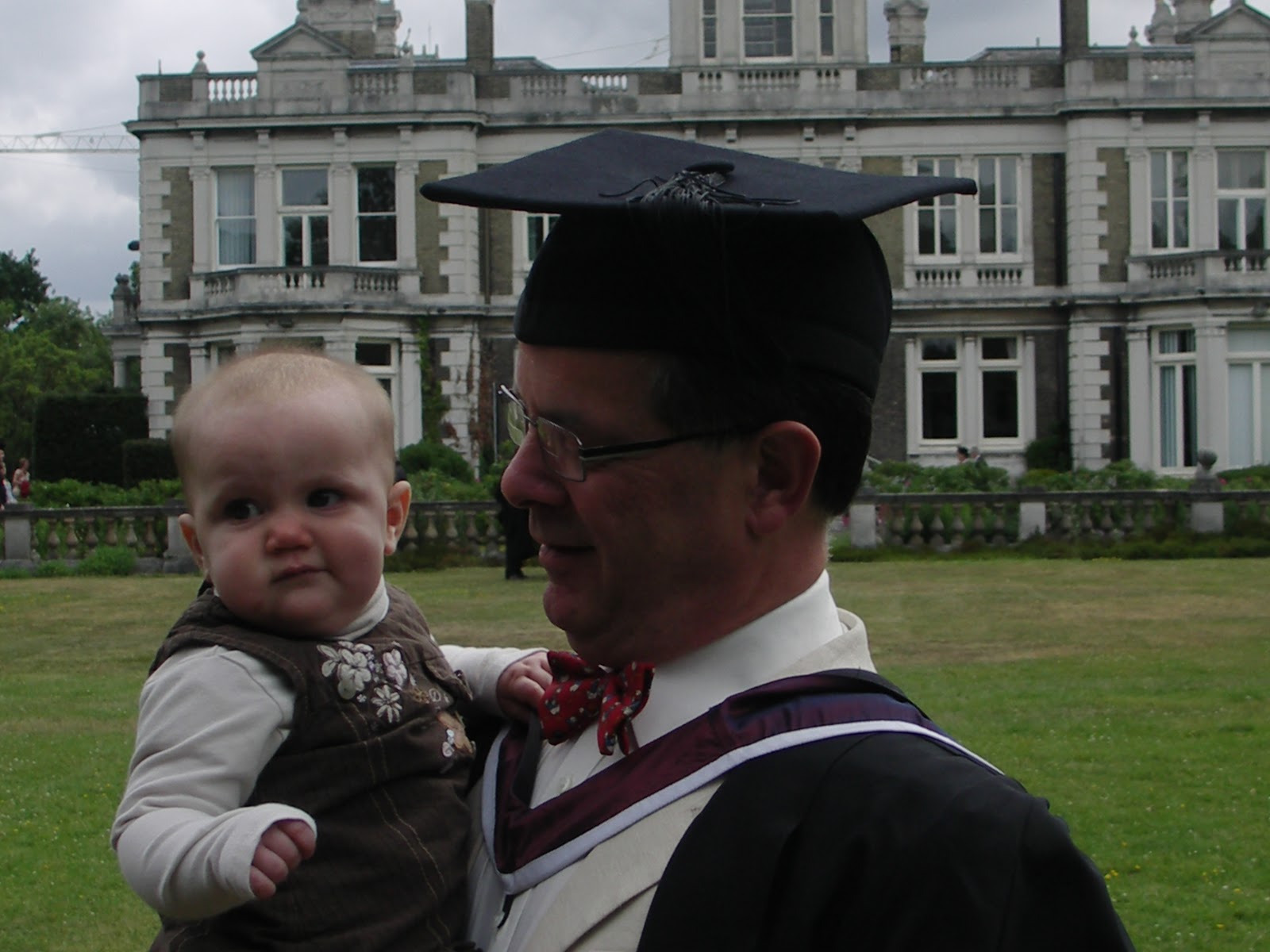
I have to say that for weddings I still dress up a little and for my graduation from Spurgeon's college in London recently I wore a more formal outfit with a bow tie (I often wore these when in business). Perhaps a reflection of having, like many of my generation, to wear a school uniform - the great leveler of children and so wanting to be different.

My grand daughter was not as impressed with my gear as she might have been, but then she was the centre of attention for all of my family.


What about church going folks, is there a dress code, how do you know what it is and do you need to follow it? Well the answers is yes, no and maybe or maybe not. Certainty there is something of the wearing Sunday best culture in many Churches and for some it is an opportunity to dress up. However for others who wear more formal clothes all week they prefer to dress down and wear casual clothes. When I was in the Congo they tended to dress up and in fact liked the preacher to wear a smart outfit and tie for services in 30degC plus temperatures and high humidity. 

In some regards we can get too hung up on what we look like almost as if our clothes suggest something about how well we are with God, our dress code should not distract others from the reason for going - to come together and worship God. Don't get me wrong I know that some wear smart clothes to church as a sign of respect for God and there is nothing wrong with that so long as we don't make it a legal requirement and so exclude others who don't have or wear such outfits. Jeff Lucas talks about a girl who stopped going when others in the church told her that her Doc Martin boots were not godly in his book Creating a Prodigal Friendly Church.

Fortunately formal dress is not required to attend church. God is concerned with our heart attitudes more than the clothes that we wear to church, we can be the smartest dressed and yet live a life that denies what we say we believe, stealing, fighting, swearing, gossiping and so on. The heart attitude that we bring with us to church is formed and fashioned by the life we live in Christ, our prayer life, our service, our love and our study of his words to us.

Perhaps if we spent a little more time on these and came together for worship of God with a pure heart full of wonder at all that he has done with and through us, we would reflect something of God's glory and that would be our outer clothing?

This little blessing from the Northumbria community might help remind us

May the peace of the Lord Christ go with you,
wherever He may send you.
May He guide you through the wilderness,
protect you through the storm.
May He bring you home rejoicing
at the wonders He has shown you.
May He bring you home rejoicing
once again into our doors.

If you want regular reminders of this bog - be a follower 

Wednesday, 23 June 2010

Prayer - active participation or an excuse for doing nothing ...

Are you one of those people who always answers "I'm OK" when someone asks how you are? Perhaps it seems too personal to say something like "I'm having a bad time of it ..." since they may ask you to tell them more. On the other hand often, in my experience, people use this question as a throw away, they don't really want to know how you feel but it makes them feel better to have asked and anyway if you told them you are not doing well, they might not know how to cope with that.

If you are someone who asks the question not expecting an answer, how do you handle someone who tells you that life is not good or they have some illness or problem to face? Do you wilt under the barrage and cut down the conversation moving on to someone else as quickly as possible or respond with platitudes like "it's OK it can only get better" or "I know someone much worse off .." or do you ask them more, listening with a sense of care?


Its not easy to get it right but perhaps having a right attitude to both the asking after someone or responding to the question would help us all to engage better with each other, not getting or giving a life history of troubles but simply responding to a genuine question with some reality which allows sharing of issues and joys.


When someone in church says in response "I will pray for you" - do you expect them to do anything? I do, I am an optimist at heart and want to find the and see the best in everyone, if they say I will pray for you in that situation, I trust that they will.


Paul in letters he wrote to churches says "pray continually" and "... and always keep on praying for all the saints", reminding them and us that prayer is serious, talking with God for that person and their situation is a privilege not a duty or a bore. We should neither promise what we won't follow up on nor turn from offering to walk with that person in prayer or allow others to walk with us in prayer.

 So in the same way that I expect others to pray for me, I pray for them, keeping a note of who I am praying for and why for my daily prayer time. For me offering prayer is not an excuse to do nothing and pass on, it is a way to actively participate in a persons situation and life, bringing them before God and asking him to transform their situation or thanking him for the good things in that persons life.

Tuesday, 15 June 2010

Patience, but I want to know now!

In Roald Dahl's Charlie and the Chocolate Factory, there is a precocious little girl called Veronica Salt, used to getting her own way in whenever she wants, her watch phrase was "I want it now!". All who have read the book or seen the films (and if you haven't shame on you, head down to your local library and borrow a copy), will have laughed at her antics and yet, as is often the case with humour, we can find we are laughing at our own nature taken to an extreme. Are we ever really patient or like Veronica are we impatient to have whatever it is we want or desire or think we need .... NOW?

Patience is a virtue we hear others say and yet it is in such short supply in this day and age, the age of instant access to money, to shops (via the internet), to entertainment (TV) and to the things that might satisfy us. Take marriage and sex for example, today the attitude to sex and marriage is more a try before you buy, rather than being patient waiting first for the wedding and then for the wedding night. Something God intended to be special between a man and a women, something that should bond, unite and strengthen, turned into a must have now commodity rather than the culmination of a patiently grown, loving commitment for life, before God.


In a small way this is reflected in gardening, at my home in the early spring I had a large pruning job to do on the roses that grow against the front of the house. A careful slow and loving task, which if done badly can wreck the plant. Months of waiting are required to even see if the plant survived it, but now it is in full bloom, more than ever before, not all at once but some buds opened while others are still closed offering a tantalising suggestion of what is yet to come.

If you look closely you might see some more sowing with love and patience that will provide beauty later in the summer.

Patience is something I am learning a lot about at the moment having just gained a Theology degree at Spurgeons college in preparation for pastoral ministry, but as yet, God has not shown me where he is going to take me next. I could be impatient and jump at the first opportunity but it is far more important to wait for God to reveal his choice to me.

Patience is one of the things that the Apostle Paul writes about in relation to church life, as something that comes from walking a life with Christ (Gal 5:22) and something Christians are told to have with each other (Col 3:11-12), because as God knows, none of us are perfect. Our impatience can lead to hasty words or actions, badly formed or badly informed opinions and breaks in the wholeness of Christ's body, his Church. It is much harder to undo something and put it right than not to have got it wrong in the first place. Applying patient consideration of issues, actions, words can avoid so much upset.

God in his patience waits for us to want to spend time with him, to give up our lives to him so that we might receive back life in all of its fullness or abundance so that we might know the peace which he gives to all who patiently trust in him.

May the peace of God which passes all understanding be upon you ...